
Hidden water leaks are a homeowner problem that often grows quietly until the signs become impossible to ignore. A small drip behind a wall or a slow leak under a slab can cause structural damage, mold growth, and higher utility bills long before anyone notices. The goal of this article is to help you find leaks early, understand how they are located, and decide when to call a pro.
Whether you live in an older house or a new build, some simple checks and a little knowledge will save money and stress. I will cover common signs of hidden leaks, practical DIY checks you can do in one afternoon, what the pros use to locate leaks, and sensible preventive habits to reduce the chance of a costly surprise.
Why Detecting Hidden Water Leaks Matters for Your Home
Water is essential yet one of the most destructive household elements when it moves where it should not. A leak that goes undetected for months can rot wood framing, ruin drywall, and feed mold. Insurance claims related to water damage are frequently among the highest both in prevalence and cost. Catching a leak early often means a smaller repair bill and less disruption to daily life.
Beyond structural issues, leaks waste water and raise utility bills. The United States Environmental Protection Agency estimates that household leaks can waste nearly 10 000 gallons of water per year. That is enough water to fill a medium sized swimming pool and a clear sign that leak detection pays for itself with lower bills and less waste.
Common Signs That Point to a Hidden Leak
Leaks do not always come with puddles. Watch for subtle clues that point to moisture where it should not be. Look for the following indicators around your home.
- Unexpectedly high water bills without an obvious reason
- Persistent damp spots on ceilings or walls
- New stains on floors or baseboards
- Mold or mildew growth in closets, under sinks, or in bathrooms
- Sound of running water when no fixtures are on
- Warm spots on floors for homes with hot water slab leaks
- Foundation cracks or soft spots in floors
Finding one of these signs does not mean disaster is certain, but it does mean it is time to investigate. A quick meter check or visual inspection can narrow down the cause and point to the next steps.
How Professionals Locate Hidden Water Leaks
Plumbing specialists use a mix of technology and experience to pinpoint leaks without unnecessary damage. They select methods based on the leak location, plumbing layout, and accessibility. Here are common techniques used on the job.
Non invasive methods electricians and plumbers commonly use
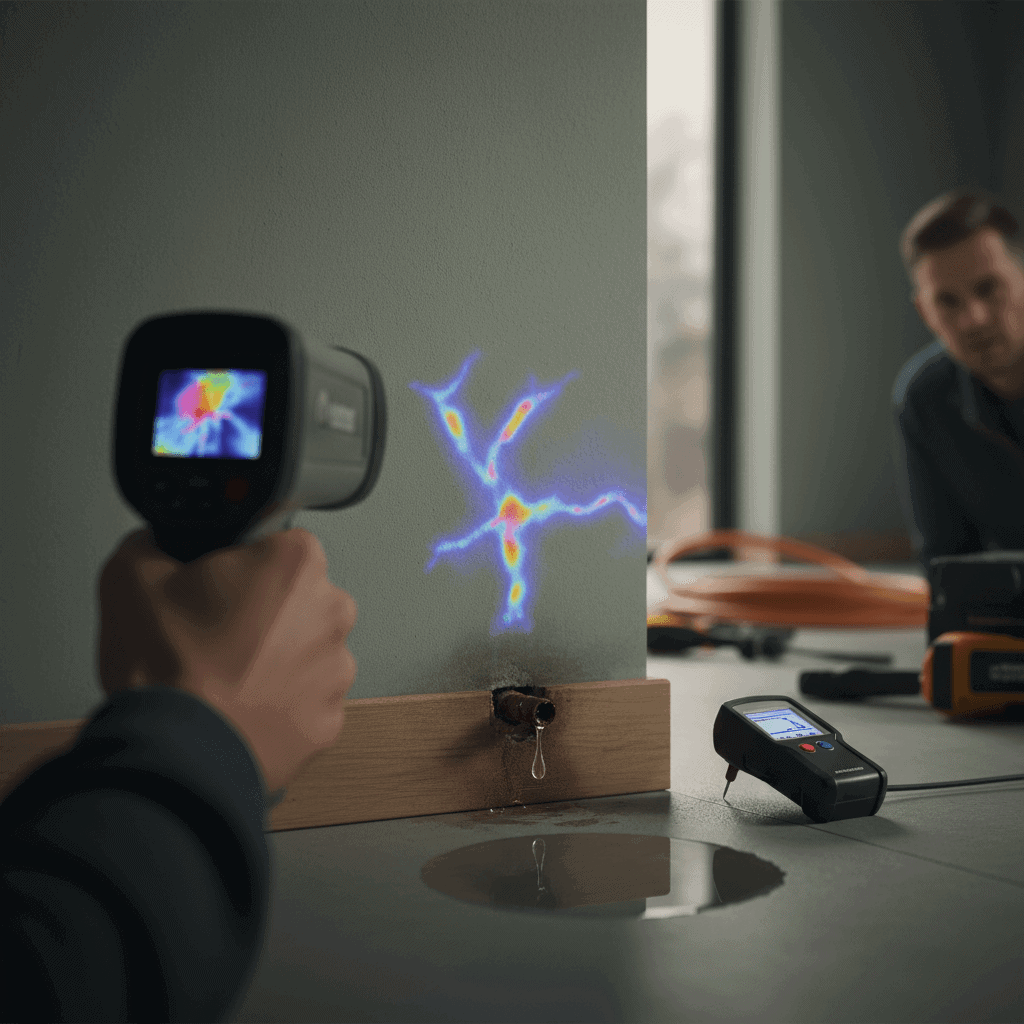
Many modern leak finding techniques avoid cutting into walls. Thermal imaging cameras detect temperature differences that reveal wet areas. Acoustic listening tools pick up the sound of water escaping pipes. Electronic tracer gas can reveal pinhole leaks in pressurized lines by releasing a safe gas into the pipe and tracking where it exits. Video pipe inspection uses small cameras fed through drains and sewer lines to show the interior condition of pipes.
When pipe exposure is required
Some leaks need targeted openings. If non invasive tests indicate a specific wall section or floor area, technicians will make minimal openings to reach the damaged pipe. The aim is to fix the problem and leave the least repair work. Skilled crews can often patch and finish the area so that repair work is barely noticeable.
Practical DIY Leak Detection Tips You Can Try Today
Before calling a pro, try some straightforward checks that often reveal the problem. These steps take little time and help narrow down whether the issue is inside the home or on the service line from the street.
- Shutdown test for supply lines. Turn off every faucet and appliance that uses water. Write down the water meter reading then wait two hours without using any water. Take a second reading. If the meter moved, you likely have a leak.
- Toilet test with food coloring. Add a few drops of food coloring to the tank and wait 15 minutes without flushing. If colored water appears in the bowl the flapper is leaking and the tank is losing water.
- Listen at night. Many leaks are audible if you sit quietly near walls or floors with fixtures off. A steady trickle or faint rushing sound can help locate the general area.
- Inspect visible pipes. Check under sinks, behind the washer, and in the basement for corrosion, wetness, or mineral buildup that indicates a small ongoing leak.
- Check outdoor hose spigots and irrigation systems. Seasonal freezes and sun exposure make these parts vulnerable to failure.
Low Cost Tools That Improve DIY Detection
A few inexpensive tools make DIY checks more reliable and faster. Consider keeping these on hand for routine home checks.
- Basic moisture meter to read wall and floor dampness
- Infrared thermometer to spot unusual cold or warm areas linked to wet spots
- Simple listening device or stethoscope for pipes
- Video inspection kit for drains and sewer lines
- A reliable water pressure gauge to test static pressure
These tools do not replace professional services for hard to find leaks, yet they reduce the guesswork and can save repair dollars by locating smaller issues early.
Costs and Benefits of Early Leak Detection
Timely discovery and repair of leaks reduce long term expense. Small repairs such as replacing a faucet cartridge or fixing a pinhole in a pipe typically cost a few hundred dollars when identified early. Leaks in slabs or under concrete can escalate into thousands if left unattended because of excavation and foundation repairs. Replacing drywall and flooring after water damage adds both material and labor costs.
Beyond direct repair costs, consider secondary expenses. Mold remediation, replacing personal items, and higher energy or water bills add to the total. Detecting leaks early lowers the total cost and shortens the time your household is disrupted.
Preventive Habits to Reduce the Chance of Hidden Leaks
Some simple maintenance and seasonal checks help prevent leaks from developing into emergencies. Here are practical habits that owners can adopt.
- Check under sinks and around appliances every few months
- Monitor water bills monthly for unexpected increases
- Test pressure relief valves and check for pooling around water heaters
- Insulate exposed pipes in cold climates to prevent freezing
- Replace old rubber hoses on washing machines and dishwashers with braided stainless options
Regular maintenance reduces the risk of sudden failures and makes any leak that does occur easier to locate and repair.
When to Call a Professional
If the leak is large, ongoing, or located inside a slab or behind finished walls and ceilings call a licensed plumber. Complex leaks can require specialized tools and permits. For fast accurate service consider reaching out to experienced local providers. For example a search for leak detection specialists will connect you with companies that use proven tools and methods to locate leaks and recommend the least invasive repair approach.
Know what to expect when the technician arrives. Ask about the diagnostic methods they plan to use, request a written estimate, and check for references or reviews. A clear scope of work helps avoid surprises and keeps the repair focused on the real problem.
If you do call in a pro, prepare the area by clearing access to water heaters, exposed pipes, the main water shutoff valve, and the suspected leak location. This saves time and may lower labor charges.
Final Preparation and Safety Tips
Take safety into account before investigating a leak yourself. Turn off electrical power if water is near outlets or appliances. Wear gloves and eye protection when opening access panels or working in crawl spaces. If you find mold, avoid extensive handling and call a remediation specialist when coverage is heavy. Use personal judgment and do not attempt major repairs that involve gas lines or structural supports.
Keeping clear records of inspections, repairs, and service visits helps build a history that can be useful for future problems and for when you sell the home. Photographs, invoices, and dates of maintenance create a reliable timeline of care.
Conclusion
Detecting hidden water leaks early saves money and protects your home from long term damage. By watching for subtle signs such as higher water bills, damp spots, and mold you can catch problems before they spread. Simple DIY checks and a few affordable tools help narrow down the source. For leaks that are hard to find or in difficult locations professionals use thermal imaging, acoustic methods, tracer gases, and video inspection to pinpoint the issue with minimal damage. Routine maintenance and seasonal preparation reduce the chance of leaks starting in the first place.
If you suspect a leak and basic checks do not reveal the source consider calling a trusted service. Fast action reduces repair complexity and total cost. Take a moment to inspect key areas around your home this month and make a plan for recurring checks. A short investment of time now can prevent expensive repairs later. Reach out for professional help if the situation looks serious or if a leak is hidden under concrete or inside finished walls. Quick response keeps your home dry and functioning for years to come.